Mental Health in Refugee and Immigrant Communities
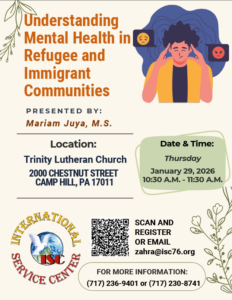
Presented by: Mariam Juya, M.S.
Date: Thursday, January 29, 2026
Time: 10:30 A.M. – 11:30 A.M.
Location: Camp Hill Trinity Lutheran Church
Event Host: Mrs. Laura Butcher, ELL Director
Event Organizer: International Service Center (ISC)
When an ISC volunteer spends time serving the refugee community, the work can be emotionally, physically, and spiritually exhausting. Gaining even a brief glimpse into what refugee neighbors have endured often sends volunteers home with a sense of disbelief at the inhumanity people can inflict on one another. Yet what volunteers experience momentarily is only a fraction of what refugees themselves live with most of the time.
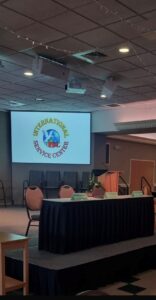
This reality framed the Community Orientation on Mental Health in Refugee and Immigrant Communities, that was organized by the International Service Center (ISC) on January 29, 2026.
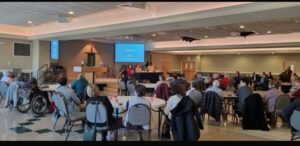
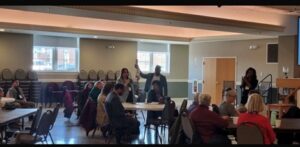
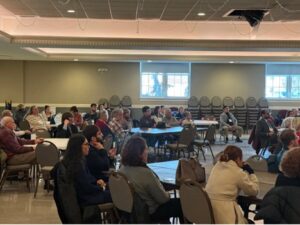
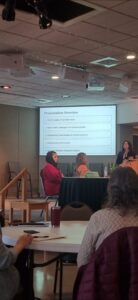
The event was graciously hosted by Mrs. Laura Butcher, the English Language Learning Program Director of Camp Hill Trinity Lutheran Church, and brought together over 70 highly engaged participants, including community and church volunteers, health care providers, education professionals, faith-based partners such as Church World Service and Catholic Charities, and respected public officials such as Dauphin County Commissioner Justin Douglas.
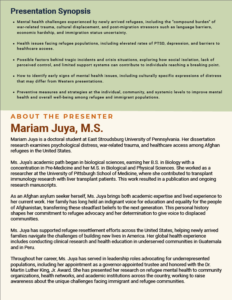
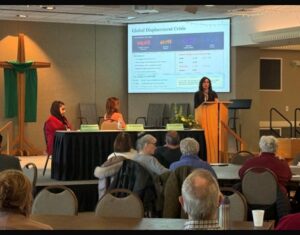
The presentation was delivered by Mariam Juya, who shared data-driven insights from her doctoral research on Afghan refugees resettled in the United States following the American withdrawal. Her presentation explored the mental, physical, social, and spiritual stressors commonly faced by Afghan refugees, including cultural and language barriers, family separation, and generational disconnects between elders from the country of origin and children growing up in the United States. These layers of stress often surface as emotional and physical symptoms that remain unaddressed due to fear of stigma. PTSD resulting from homeland violence frequently manifests through anxiety, social isolation, physical complaints, and emotional exhaustion, with limited opportunities for relief. Research shared during the presentation also demonstrated that unresolved trauma could extend across generations.
Ms. Juya further addressed broader contributing factors, including global displacement trends, the psychological impact of travel bans and violent events, barriers to healthcare access, and the importance of recognizing early warning signs of mental distress. She emphasized culturally responsive approaches and global healing traditions alongside prevention strategies that restore control, build connection, and reduce stigma.
Although the content was heavy, the session concluded with a strong sense of hope and shared purpose.
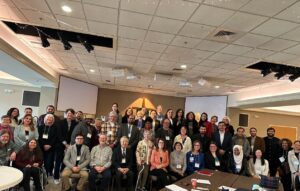
During the question-and-answer segment, participants actively exchanged stories, resources, and solutions. Organizations’ representatives, including PA Department of Human Services, Penn State Health, Church World Service, Catholic Charities, healthcare providers, and faith-based ESL programs highlighted collaborative efforts already making a difference. Additional needs were identified, including transportation support for Trinity Lutheran Church’s ESL programming, while ISC shared information about its Language Bank, immigration legal services, and volunteer support programs, reinforcing its central role in community coordination.
The event concluded as a meaningful and fruitful session that strengthened partnerships, deepened understanding, and reaffirmed ISC’s commitment to being part of the solution rather than allowing frustration or helplessness to prevail. Participants left with a clearer appreciation of the vital role ISC and its partners play in supporting refugee and immigrant mental health across the community.


No Response to “Mental Health in Refugee and Immigrant Communities”